If you want your website to appear higher on Google, On-Page SEO is one of the most important things you need to understand. You may have great products, services, or content, but if your website is not properly optimized, it can be difficult for search engines and users to understand your pages.
The good news is that On-Page SEO does not always require advanced technical knowledge. By improving your content, headings, keywords, images, URLs, and overall user experience, you can make your website more search-engine friendly.
In this guide, let’s understand what On-Page SEO is and how you can use it to improve your website’s visibility.
What Is On-Page SEO?
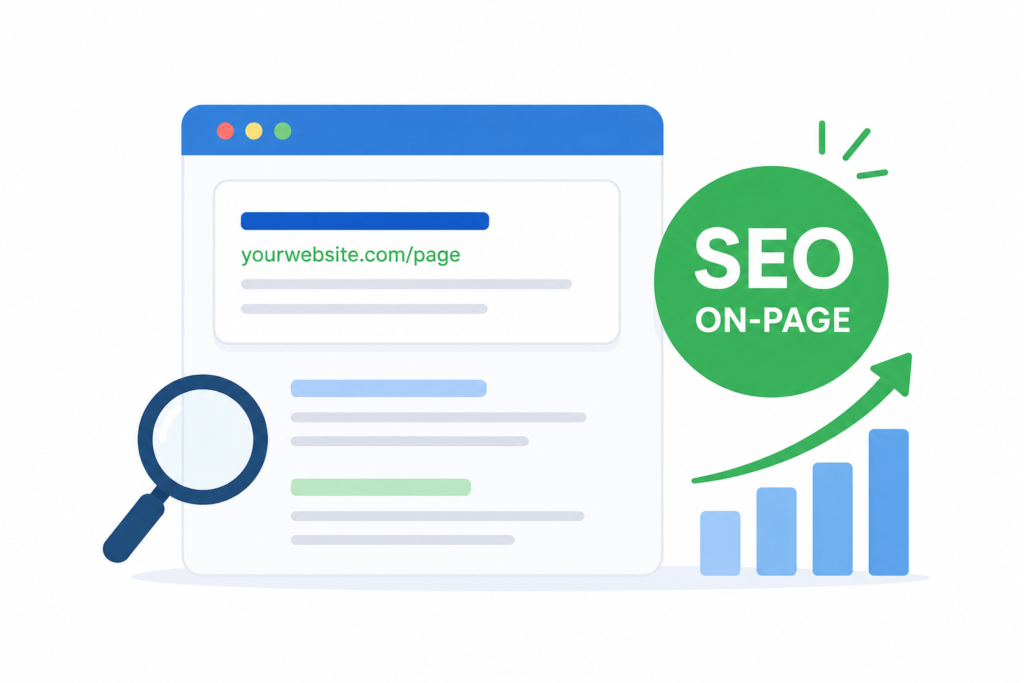
On-Page SEO means optimizing the elements of a webpage to help search engines understand its content and provide a better experience to visitors.
It includes things such as:
- Keyword optimization
- Page titles
- Meta descriptions
- Headings
- Website content
- URLs
- Images and alt text
- Internal links
- Page speed
- Mobile-friendly design
The main goal is simple: make your webpage useful, easy to understand, and relevant to what people are searching for.
Why Is On-Page SEO Important?
When someone searches for something on Google, search engines try to show the most useful and relevant results.
Proper On-Page SEO helps Google understand:
What your page is about → Who it is for → What question it answers
For example, if you have a page about “Digital Marketing Services,” using relevant keywords naturally in your title, headings, content, and URL can help search engines understand the topic of the page.
But remember, SEO is not just about adding keywords. Useful content and a good user experience matter too.
7 Important On-Page SEO Factors
1. Use the Right Keywords
Keyword research should be the starting point of your SEO strategy.
Find keywords that your target audience is actually searching for. Instead of repeating the same keyword again and again, use it naturally throughout your content.
For example, if your main keyword is “On-Page SEO,” related terms could include:
- On-Page SEO techniques
- On-Page SEO checklist
- SEO optimization
- Website SEO
- SEO tips for beginners
This helps you create content around the complete topic instead of focusing on one keyword only.
2. Optimize Your Page Title
Your title is seen early on by users and search engines.
Try to create a title that clearly explains what the page is about and naturally includes your main keyword.
For example:
On-Page SEO: 7 Simple Techniques to Improve Website Rankings
A good title should be clear, useful, and attractive enough to encourage people to click.
3. Write a Useful Meta Description
A meta description gives users a short idea about what they can expect from your webpage.
Keep it clear and relevant. Include your primary keyword naturally and explain the benefit of reading the page.
For example:
Learn the most important On-Page SEO techniques, including keywords, headings, URLs, images, internal links, and content optimization.
A good description can help improve your search result’s click-through rate.
4. Use Proper Headings
Headings make your content easier to read and help search engines understand the structure of your page.
Use one main H1 heading for the page and organize the rest of the content using H2 and H3 headings.
For example:
H1: On-Page SEO: Complete Guide
H2: What Is On-Page SEO?
H2: Why Is On-Page SEO Important?
H2: Important On-Page SEO Factors
H3: Optimize Your Page Title
This structure makes your content easier to scan, especially for mobile users.
5. Optimize Images
Pictures can increase the attractiveness of your content, but they also need to be optimized.
Use descriptive file names instead of names like:
IMG1234.jpg
A better example would be:
on-page-seo-guide.jpg
You should also add meaningful alt text to images. Alt text helps describe the image and can improve accessibility.
Also, compress large images so they don’t unnecessarily slow down your website.
6. Add Internal Links
Internal links connect one page of your website to another.
For example, if you are writing about On-Page SEO, you could link to another useful article about Keyword Research, Technical SEO, or SEO Content Writing.
Internal linking helps visitors discover more content and helps search engines understand the relationship between pages on your website.
7. Create Helpful and Original Content
The most important part of On-Page SEO is your content.
Don’t write an article only to add keywords. Write content that actually answers the user’s question.
Ask yourself:
“Will anyone reading my full article find the information they were looking for?”
If the answer is yes, you’re heading in the right direction.
Keep your paragraphs short, use examples, add useful headings, and avoid unnecessary repetition.
Common On-Page SEO Mistakes to Avoid
Many beginners make the mistake of adding the same keyword repeatedly because they think it will improve rankings.
This is called keyword stuffing, and it can make your content difficult to read.
Other mistakes include:
- Writing thin or unhelpful content
- Using unclear page titles
- Ignoring mobile users
- Using very large image files
- Not adding internal links
- Creating duplicate content
- Using misleading headings
- Ignoring user intent
Instead of trying to trick search engines, focus on creating the best possible page for your audience.
Final Thoughts
On-Page SEO is not about putting keywords everywhere. It’s about making your website clear, useful, relevant, and easy to navigate.
Start with proper keyword research, create a strong title, organize your content with headings, optimize your images, add internal links, and most importantly, provide genuine value to your readers.
SEO requires patience so don’t hope for success. Keep improving your website, publish useful content consistently, and monitor your performance.
Remember: Good SEO helps search engines understand your website, but great content gives people a reason to stay.